




From tariffs to trust, the SCO Summit marks a turning point in India’s global balancing act.
THE RECENT SCO Summit in Tianjin provided India with a timely opportunity to reset its ties with China and nudged Russia to revive the old Russia–India–China (RIC) forum. RIC may emerge as a potential defence against the US’s tariff mania by boosting trilateral cooperation and trade.
The Shanghai Cooperation Organisation (SCO) Summit in Tianjin, China, emerged as a forum where old enmities were set aside and new ties renewed—all due to the theatrics of one man, US President Donald Trump.
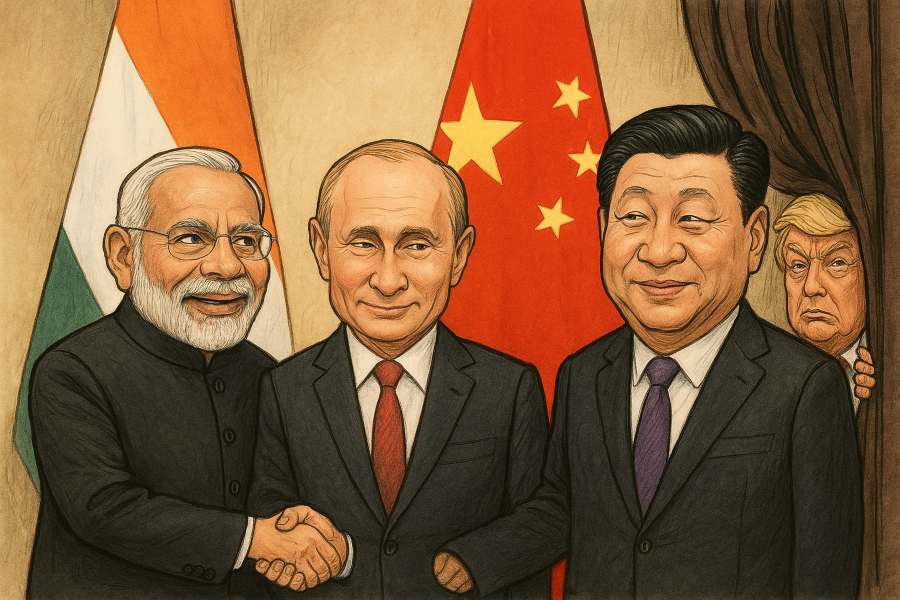
Though the summit’s focus was on bilateral and multilateral issues, the most significant outcome was the meeting between Indian Prime Minister Narendra Modi, Russian President Vladimir Putin, and host Chinese President Xi Jinping.
Beyond the optics, the warmth among the three leaders was evident throughout. The special treatment given to PM Modi, especially in comparison to his Pakistani counterpart, stood in stark contrast.
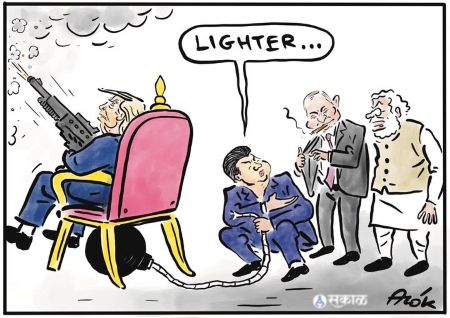
Modi’s visit to Tianjin came just days after the US doubled tariffs on Indian exports to 50%, citing New Delhi’s refusal to stop buying Russian oil, and only a day after a federal appeals court limited Trump’s authority to impose sweeping tariffs.
On Sunday (August 31), President Trump defended his controversial tariff policies, calling them vital to the country’s economic and military security. In a post on Truth Social, he wrote:
“Without Tariffs, and all of the TRILLIONS OF DOLLARS we have already taken in, our Country would be completely destroyed, and our military power would be instantly obliterated.”
The post came after the US Court of Appeals for the Federal Circuit ruled 7–4 that Trump had overstepped his authority under the International Emergency Economic Powers Act (IEEPA) by imposing broad tariffs on nearly every country. The court, however, upheld certain targeted protectionist measures.
Before the SCO Summit, experts had been waiting for a breakthrough in India–China, India–Russia, and Russia–China relations, as well as signs of an effort to extend BRICS’ scope by stressing multilateralism and finding ways to reduce reliance on the US dollar as the global currency.
As Modi began his trip, Trump’s trade adviser Peter Navarro stepped up his criticism of India, claiming on X that the country had become an “oil money laundromat for the Kremlin.”
 India has consistently defended its Russian oil purchases, saying they are vital to keeping energy costs stable in its vast developing economy, help steady global prices, and comply with international law. Modi has sought to balance his stance on the Ukraine war—refusing to criticise Moscow directly while repeatedly calling for peace.
The economic blow from the tariffs is immense. The US is India’s largest export market at $86.5 billion a year, and two-thirds of that—about $60.2 billion worth of goods—is now subject to new duties, hitting labour-intensive sectors such as textiles and jewellery.
Even before the tariffs, India had been cautiously warming to China as a source of investment and technology in hopes of boosting trade.
Relations between the two neighbours froze after a deadly clash along the disputed Himalayan border in 2020 but began to thaw when Modi and Xi met in person for the first time in four years at a BRICS summit in Russia last October. Still, Modi’s mind will also be on his country’s rift with America—and how India should respond.
In just a few months, Donald Trump has found two ways to humiliate the Indian government: first, by appearing to side with Pakistan, an old adversary; and second, by hitting Indian exports with extortionate tariffs. This fallout has prompted India, an emerging economic giant, to think more deeply about its course.
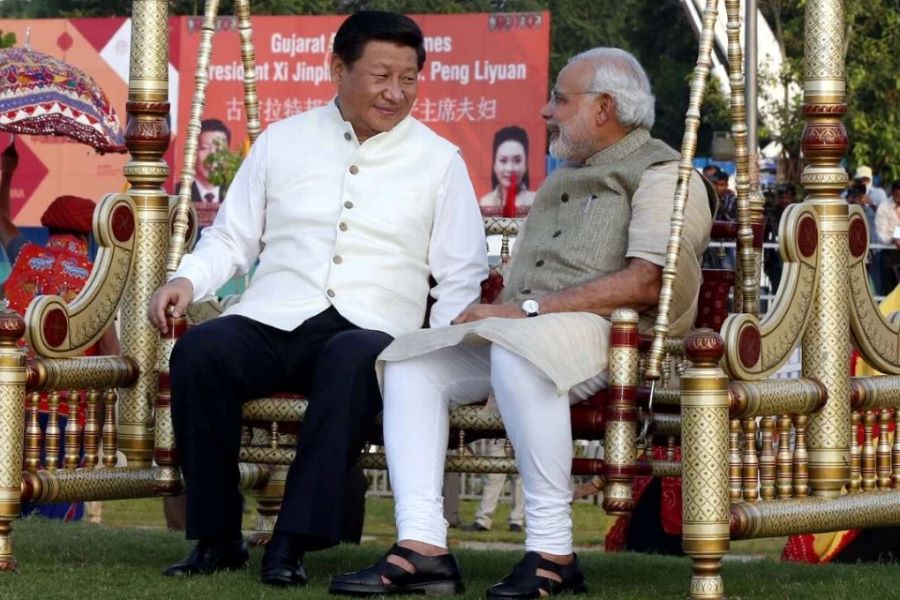 Talks between India and China are now shifting to economic matters. Since the 2020 clashes, India has restricted Chinese investment and denied visas to some Chinese executives. Yet during this period, Indian imports from China have only grown.
Last year, India bought about $114 billion worth of goods from its northern neighbour—roughly 75% more than five years ago—while exporting only about $14 billion in return. Much of what India buys from China consists of inputs essential to its industries.
Chinese capital and know-how could strengthen Indian manufacturing, enabling it to develop its own advanced industrial base and reduce reliance on imports. The Indian government understands this but had been reluctant to relax investment curbs while trade negotiations with Trump were ongoing. With those talks now stalled, a slightly freer stance on China may be back on the cards.
Another possible response to Trump’s actions could be for India to accelerate long-delayed domestic reforms, helping it withstand such external pressure in the future.
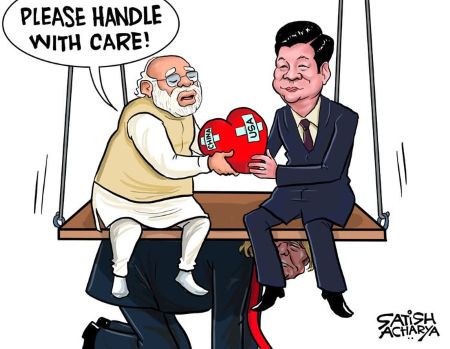
Meanwhile, as India and China improve ties—and with both already close to Russia—the revival of the RIC troika (Russia, India, and China) looks increasingly possible.
The RIC was first conceptualised in the 1990s by former Russian Prime Minister Yevgeny Primakov, at a time when Russia was struggling to find its place in the post-Soviet world. In the early 2000s, it was institutionalised, with around 20 ministerial-level consultations held since.
The idea behind RIC was simple: Russia, India, and China should form a strategic triangle to counter growing Western hegemony. Initially, both India and China kept their distance, owing to differences between them. Despite reservations, their foreign ministers held a trilateral meeting in September 2003 on the sidelines of the UN General Assembly.
In the late 1990s, India was liberalising its economy and seeking stronger ties with the West, particularly the US. As a result, it remained distant from RIC. India’s 1998 Pokhran-II nuclear tests, which drew strong condemnation from China, further complicated matters.
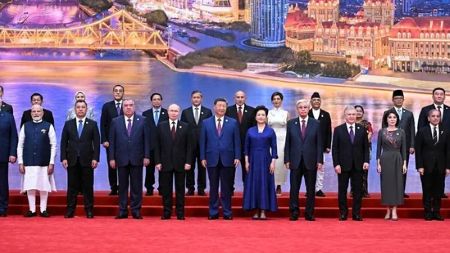
SCO Summit 2025
China, too, long maintained its distance from RIC. But Beijing is now showing renewed interest in reviving the forum, spurred partly by Washington’s aggressive trade policies under Trump. Notably, China openly backed India after the US imposed 50% tariffs on Indian goods for continuing to buy Russian oil.
For its part, Russia has long sought RIC’s revival and has been in talks with India and China to this end. Earlier this year, Moscow reaffirmed that the three countries are vital partners as well as founding members of BRICS.
Together, Russia, India, and China account for $53.9 trillion in global GDP (PPP)—around 33% of the world’s total output. Their combined exports exceed $5 trillion, and their foreign reserves total $4.7 trillion, according to The Economic Times.
All three are nuclear powers that consistently push for a multipolar world and oppose unilateralism. Their combined military spending is $549 billion, and they consume 35% of global energy.
Experts believe it may still take time for RIC to redraw the global order. But the Tianjin summit has undoubtedly given Modi an opportunity to step up India’s diplomatic game. 
________
Also Read:
Silencing Journalism: Pressure Tactics and Law

Asad Mirza
The author is a New Delhi-based senior commentator on national and international affairs, defence and strategic issues, and environmental concerns. He is also an interfaith practitioner and a media consultant. Previously, he was associated with the BBC Urdu Service and the Khaleej Times in Dubai.
Disclaimer : PunjabTodayNews.com and other platforms of the Punjab Today group strive to include views and opinions from across the entire spectrum, but by no means do we agree with everything we publish. Our efforts and editorial choices consistently underscore our authors’ right to the freedom of speech. However, it should be clear to all readers that individual authors are responsible for the information, ideas or opinions in their articles, and very often, these do not reflect the views of PunjabTodayNews.com or other platforms of the group. Punjab Today does not assume any responsibility or liability for the views of authors whose work appears here.
Punjab Today believes in serious, engaging, narrative journalism at a time when mainstream media houses seem to have given up on long-form writing and news television has blurred or altogether erased the lines between news and slapstick entertainment. We at Punjab Today believe that readers such as yourself appreciate cerebral journalism, and would like you to hold us against the best international industry standards. Brickbats are welcome even more than bouquets, though an occasional pat on the back is always encouraging. Good journalism can be a lifeline in these uncertain times worldwide. You can support us in myriad ways. To begin with, by spreading word about us and forwarding this reportage. Stay engaged.
— Team PT